Need Help?
(042) 36367373
Naqi Arcade Plaza, Mall Road
Lahore, Pakistan
Send email
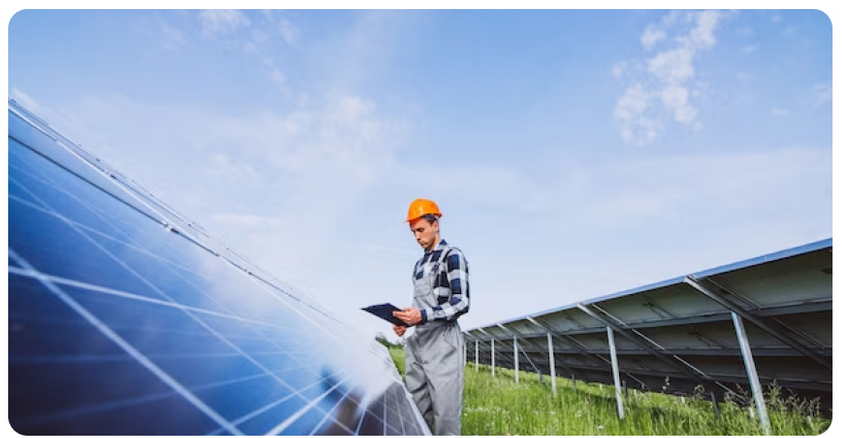
The fabrication of solar structures involves several steps and processes, including designing, material selection, cutting, shaping, and assembly. Here is a general overview of the fabrication process:
There are several types of solar structures that are commonly used to mount solar panels and arrays. Here are some of the most common types:
This is the most common type of solar structure and is designed to be installed on the roof of a building. It can be attached to the roof using a variety of methods, including bolts, clips, and ballasts.
Ground-mounted solar structures are installed on the ground and are typically used when there is not enough space on the roof for the required number of solar panels. They can be fixed or tracking, which means that they follow the movement of the sun throughout the day to maximise energy production.
Blasted mountings are specially designed for industrial applications where strength and durability are paramount. They are ideal for harsh environments.
Auto trackers follow the sun's movement to optimize solar energy production throughout the day. They adjust automatically to maximize efficiency.
Manual trackers require periodic adjustment to track the sun's movement. They are less expensive than auto trackers but require human intervention.
Special structures are customized solutions for unique installations, such as solar carports, floating solar systems, and more.
Car parking sheds are dual-purpose structures that provide shelter for vehicles while generating solar energy.
Street light poles are fabricated to support street lights and are designed to withstand harsh weather conditions. They can be equipped with additional features such as sensors and cameras.
Variable Message Sign (VMS) poles are used to mount digital displays for traffic and public information purposes.
Camouflage poles are designed to blend into the environment and are often used in sensitive areas such as nature reserves or military bases.
Stadium light poles are tall structures that support large lighting systems to illuminate sports arenas and stadiums.
Octagonal poles are strong and durable structures commonly used for street and highway lighting.
Conical poles have a tapered design that provides both strength and aesthetics. They are often used in urban settings for street lighting.
Tubular poles are lightweight and easy to install, making them a popular choice for a variety of applications including street lighting.
These accessories include clamps, mounts, and other components essential for the installation and operation of solar systems.
Ducts are fabricated for HVAC systems to ensure efficient airflow and temperature control in residential and commercial buildings.
Cantilever beams are structural elements used to support loads without external bracing, often used in construction and solar installations.
Cable trays are used to support and protect electrical cables in industrial and commercial buildings.
Cable ladders provide a robust framework for the installation of electrical cables in large buildings.
Dairy sheds are fabricated to house livestock and ensure optimal conditions for dairy production.
Industrial sheds are large, open structures used to house machinery, equipment, or materials in industrial settings.
Industrial ladders are used in various settings to provide safe access to elevated areas.
Gantry structures are fabricated to support road sign boards, providing visibility and safety on highways and major roads.
Structural works include the fabrication of beams, columns, and other elements used in construction projects.
The fabrication of solar structures involves designing, material selection, cutting, shaping, and assembly to support solar panels and arrays.